
The leadership model you know is already dying
Mastering what makes us human
- Firstly, there’s strategic/critical thinking.
- Problem-solving and decision-making came in second.
- Communication, both written and verbal, in the third spot.
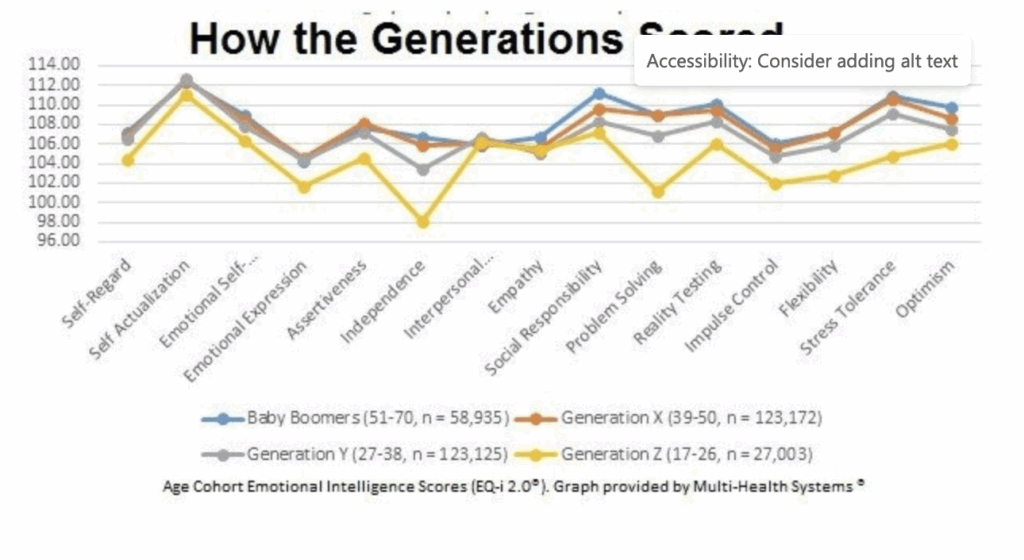
Is digital dependency killing Gen Z’s problem-solving?
The real reason Gen Z is struggling? It’s complicated
Although it’s an interesting discussion, it’s impossible to pinpoint exactly what it is that has caused the skill gap, because it’s most likely a combination of these many factors.
At no fault of Gen Z, the introduction of tech into our daily lives has changed things forever. It’s important to also recognise the huge strengths and unique skill sets that the younger generations possess such as digital fluency, creativity, and a strong desire for creating meaningful work that has a positive impact.
"In order to be successful, you have to know the business from the ground up. You can't lead if you don’t understand the work at every level. You have to be willing to do this and keen to learn." - Tracy Wood
It seems that education and technical expertise (hard skills) can open doors. But for longevity and progression, we must look at the growing significance of combination skill sets. Being an ‘all-rounder’. Having hard AND durable skills (the new phrase for ‘soft skills’). Essentially the skills that make us human.
Executives in an online edX survey claimed that nearly half of the skills valued in today’s ‘workforce won’t be relevant just two years from now, thanks to artificial intelligence.’
Similarly, in an article by Politico, they discuss practically what this mix of hard and soft skills could look like: IT, data processing, operations, logistics and engineering, as well as communication, creativity, critical thinking and leadership.
Surviving isn’t down to a career anymore, its down to adaptability
To gain deeper insight into how these skills evolve in real-time, I recently spoke with three female agency directors about their unconventional paths to success and the leadership lessons they’ve learned along the way. They all stressed the importance of empathy, trust, and collaboration in leadership, noting that good leaders need to be balanced and understanding to foster a supportive work environment.
I asked what experiences they had in their career that helped them become a balanced leader?
“I stumbled into what eventually became a career. I started university determined to be a solicitor, but quickly realised it wasn’t for me and dropped out halfway through. After that, I tried all sorts of part-time roles, explored many different career paths, and eventually landed in marketing, what was then called ‘new media’—essentially anything involving websites and online content. It was a series of random, unplanned steps, from moving for my husband’s job to transitioning into new roles at the same company, and eventually ending up at an agency I knew nothing about. I walked into that interview with no real expectations and got the job. Starting at entry level, I did everything needed to keep the agency running, and as people moved on, I took on their responsibilities. Each step was about being adaptable, saying ‘yes’ to new challenges, and putting myself out there. That’s really where my leadership skills started to develop—not from a defined plan, but from embracing each opportunity as it came.” Katy Smith
“Good leaders don’t want to lead.” - Robin Falke
The best leaders don’t plan to lead—they just do it
The selection of decisions Katy made, although unplanned, demonstrate how a through a scope of observation, readiness to learn, and effective social skills flourish into adaptability and leadership skills. Taking a non-linear career path, carving out a space for yourself in an industry with a willingness to take on new challenges. This is what cultivates the adaptability and leadership skills that companies seek.
It’s argued that the best leaders don’t want to lead, they end up in leadership positions. This is what makes them good. They’re understanding and empathetic.
Dr. Anne Snyder, in a piece for Forbes, suggests managers who are promoted based on their technical ability as opposed to people their management skills tend to adopt a “command-and-control” leadership approach. Without proper experience, they micromanage, which undermines the agency and innovation employees need to work efficiently.
Education has generally had a traditional content focused approach. It is evident that changes are to be made in schools but also in the workplace to account for the rapidly evolving job market. Real-world problem-solving exercises, a focus on lifelong learning, workshops and mentoring in human centric skills could help to bridge this gap and many of these motions are in place already.
“Being a good leader is about sitting back and thinking first. You don’t react; you reflect.” - Hannah Stephen
The things that make us human make us irreplaceable
Putting some distance between how we feel and how we react creates valuable opportunities for critical thinking.
However, in today’s fast-paced world, it’s understandable that slowing down can be challenging. Still, it is in this ability to pause, reflect, and ‘trust the process’ that true human potential shines. As Hannah wisely puts it, “Trust is everything in leadership. If you give people responsibility and trust, they’ll rise to the occasion every time.”
In many ways, we must treat patience, independent thought, egoless thinking, and collaboration as a form of meditation – a deliberate practice. Despite the rapid changes brought by AI, these human centric skills are what will ultimately differentiate us. While AI plows ahead, automating countless tasks and efficiencies, it is our patience and human-centered qualities cultivated in the background that will prove irreplaceable.
Slow and steady wins the race because when jobs inevitably shift or disappear due to AI, these deeply human skills—critical reflection, empathy, and the power to build trust— cannot be replicated by machines. They are the skills that will endure, ensuring we remain at the heart of a meaningful and impactful workforce.
Continue the Conversation
Are you driving for automation or designing AI Systems for collaboration?

I can help you:
- Deliver next-generation digital experiences for customers
- Align enterprise technologies with operational & strategic goals
- Understand AI across business operations & customer experience