
Working in digital business for 28 years with a Classics and Ancient History degree in my back pocket, I’ve waited a long time for technology and existentialism to collide! With AI technology forcing us to confront what it means to be human in a world where machines can mimic consciousness, now’s the chance. At last weeks CoreMedia Connect event in Hamburg we spoke about a philosophy for thinking about and engaging with AI. Creating AI Systems to leverage unique machine and human qualities, driving results that are greater than either could achieve alone.
AI changes how we make decisions
We’re currently at peak hype for anything agentic, and for good reason! One of the most significant innovations in human history, AI is already reshaping economies, labor, knowledge creation, and our sense of identity. They act as brand concierge, booking agent, personal assistant and expert in any field you can imagine, and many you cannot. But AI is not just about automating tasks. It’s changing how we make decisions, how we collaborate with technology and with each other. The long-term social impact will be determined by how we choose to integrate AI into our lives.
AI augments your Intelligence!
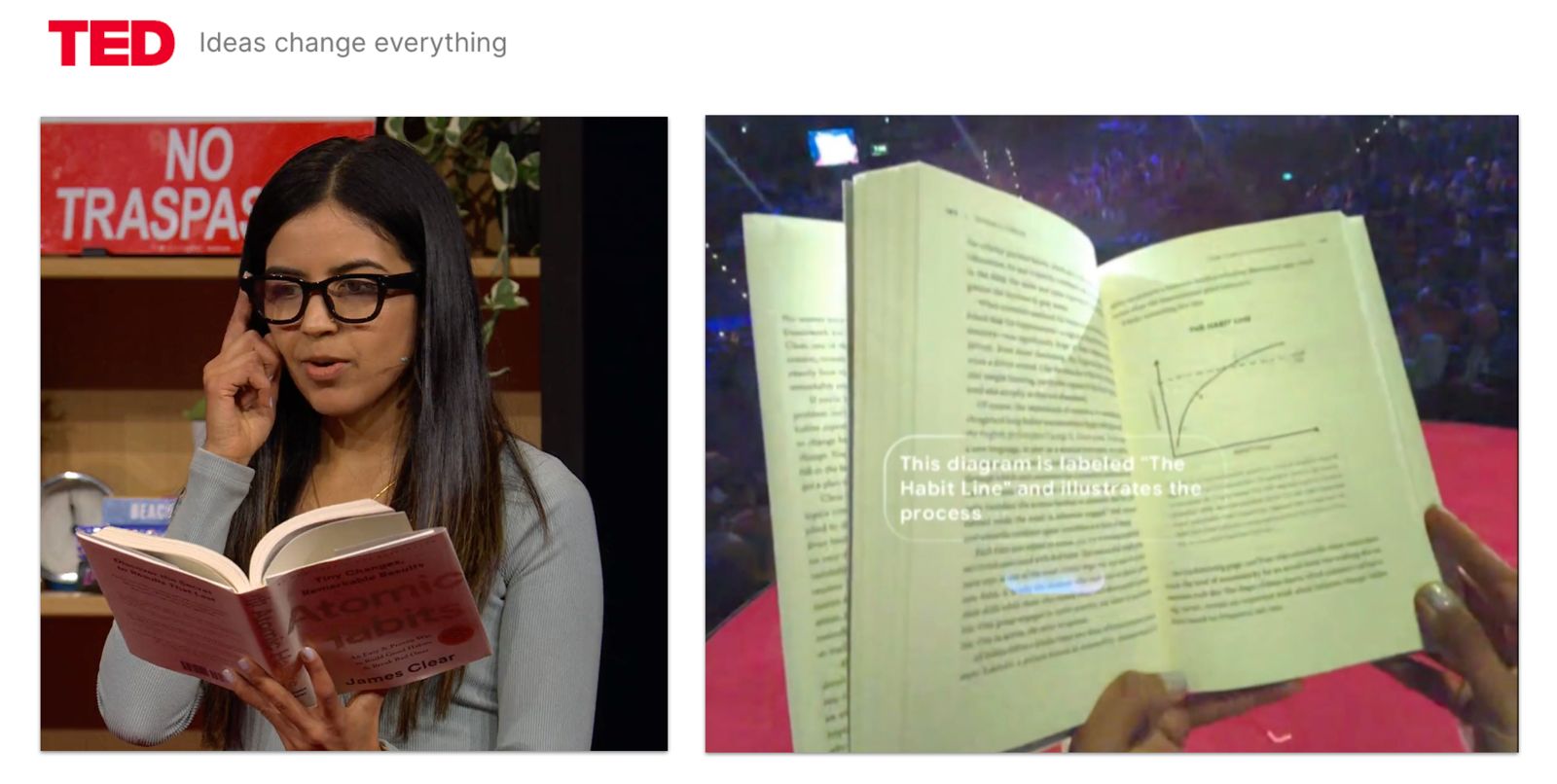
Last month, Google unveiled their new Android XR platform; Extended Reality! Gemini built into smart glasses. XR combines visual data and natural language, to digest complex queries. Real time, contextual, conversational and personal. Wearable AI! The AI shares your vantage point and understands your world, all through a simple, conversational interface. This is AI working with us to directly augment our intelligence in daily life.
AI is a GPS for the brain!
With Gen Alpha already referred to as the AI Generation, artificial intelligence is fast becoming a GPS for the brain. Young people who’ve grown up with algorithms, now use Chat GPT to study and learn.
How will this impact critical thinking? What happens when the GPS fails? If critical thinking, decision making and leadership skills decline? If we loose the ability to make conceptual leaps outside of what the data is telling us? The ability to question, when data is wrong, misleading, or lacking in context and understanding of cultural nuance?
AI is not software
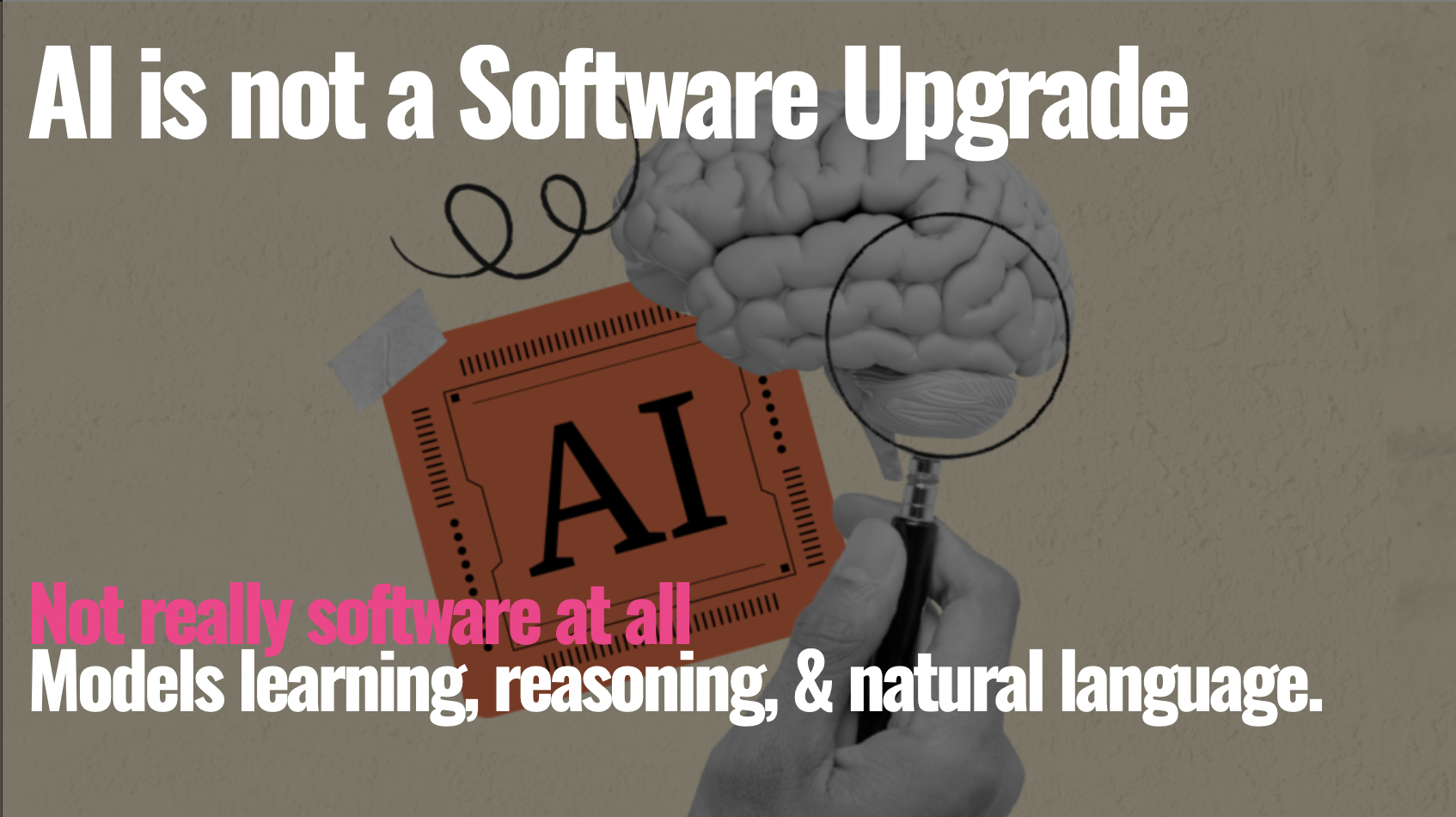
Some of the answers lie in the way we understand, think about and engage with AI. AI is not like traditional software, with consistent inputs and deterministic outputs.
👉 AI models human learning and reasoning
👉 AI is highly contextual
👉 Shifting, trainable and retrainable, drifting as data and interactions change
👉 Constantly fine-tuned to new use cases and new users
Artificial intelligence as Collective Intelligence. Jenny Nicholson in a recent interview suggests Artificial intelligence is in fact: a hyper-dimensional mind map of the combined, collective recordings of human thinking, everything from the oldest philosophers, all the way to the people in a random sub Reddit. All of us are in there, and that’s effectively what you’re connecting with every time you talk to a Language model. And the mind map is constantly shifting and changing, influenced by new users and new uses.
Thoughtful intent. We play an integral role in the process of training and influencing AI outputs and our approach to this matters. AI is a reflection of user intent. The 14 year old who wants a shortcut to learning can have Chat GPT do the work instead. But the student looking to augment and support their classroom work can find a powerful and effective personal tutor in AI. What matters is the intent.
AI Systems centre on mutual learning
An effective AI System is a two way street, a feedback loop. We should approach AI as a collaboration, an exchange of ideas. A partnership, that’s bigger than the sum of it’s parts. A system with human and machine skills at work.
Machines analyse huge data sets in seconds, recognising patterns and offering insights that humans could never dream of.
Humans bring unique skills learned through decades of living with other humans. Emotional intelligence, contextual nuance, cultural difference, creative thinking and conceptual leaps that involve more than just the analysis of hard data.
AI insights expand human understanding. But human expertise continuously improves AI, guides decision making and aligns AI behaviours with the values and principles we’d like to see in our future organizations and across our society.
Techno-Humanism!
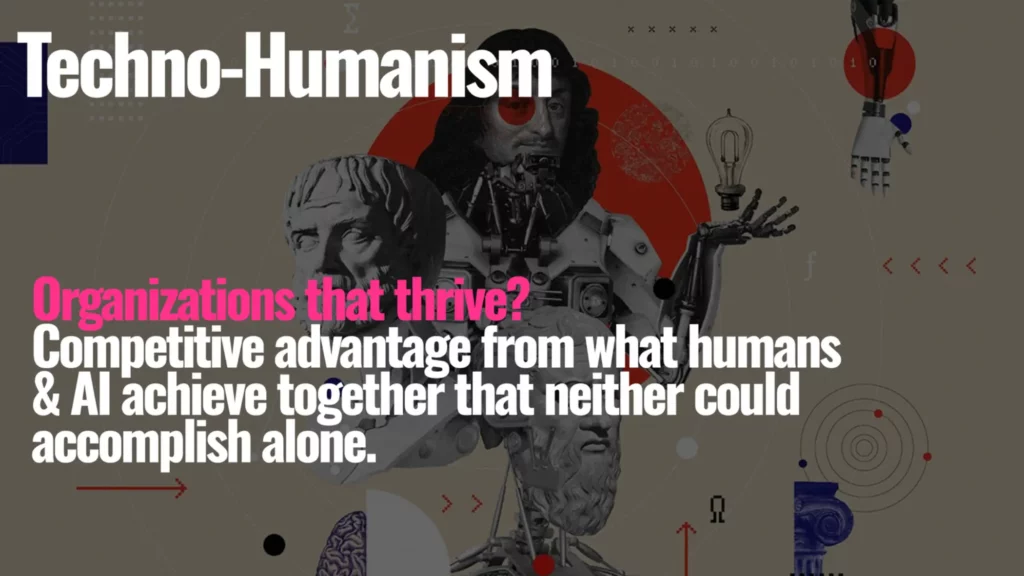
The organizations that thrive in the future won’t just be those that deploy the most advanced AI. But those that also figure out how to effectively integrate human and machine intelligence. How to create cohesive, collaborative AI Systems into their process, thinking and decision making. Those that can create a balanced culture that embraces technology, while focusing more than ever before on uniquely human attributes and values.
Intentional redesign
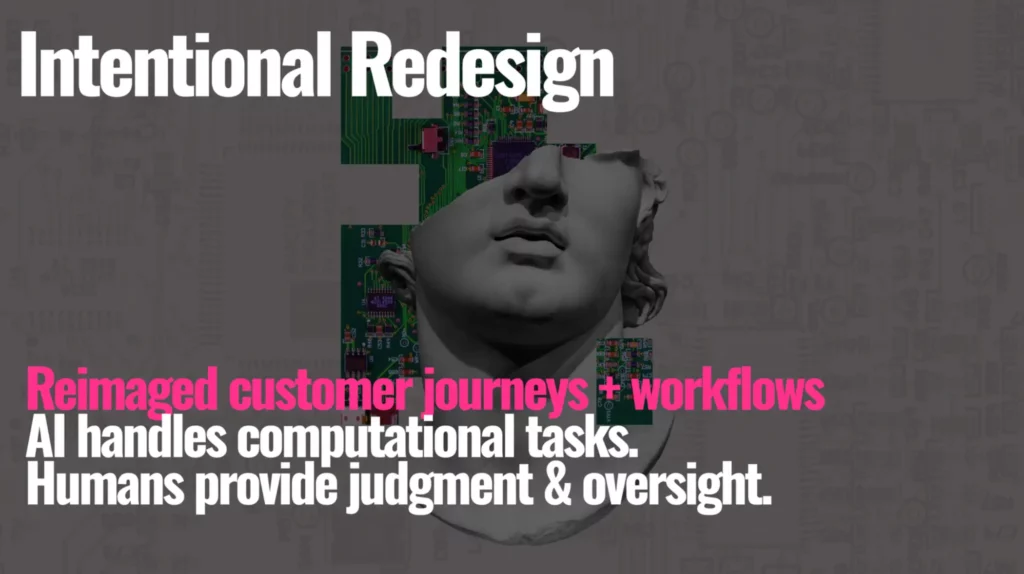
Successfully integrating AI into business and life requires thoughtful and intentional redesign.Reimagining ways of working and living as part of a collaborative system between AI and Human. Where the final output is greater than either could achieve alone. Where humans and machines collaborate in complementary roles. And where humans consider the repercussions of there intent, and are careful with the inputs and direction they feed into the collective AI experiment.
Continue the Conversation
Are you driving for automation or designing AI Systems for collaboration?

I can help you:
- Deliver next-generation digital experiences for customers
- Align enterprise technologies with operational & strategic goals
- Understand AI across business operations & customer experience